Slap a catalogue number on me, Henry.

Is there anything better than perusing glossy photographs of artificial limbs and trepanned skulls over one’s breakfast? I think you’ll find there isn’t.

This week, I won a copy of the Wellcome Collection’s brand new ‘Guide For The Incurably Curious’.

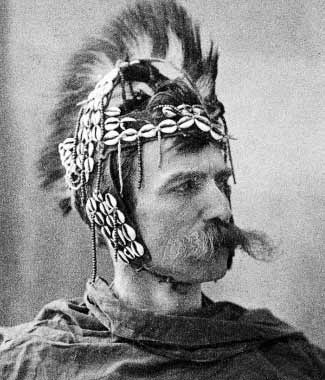
Wellcome is my favourite museum. If you have the slightest interest in wunderkammer, it’s a playground. The perfect balance of the medical, the historical, the scientific and the artistic, lovingly founded by Victorian philanthropist Henry Wellcome. Look upon his facial hair and tremble.

I’ve spent birthdays there, handling live leeches and drinking gin. I’ve seen Mexican miracle paintings there, verdigris mediaeval skeletons, and glass acorns for warding off lightning strikes. Once, an attendant saw how excited my friends and I were and fetched us goodie bags complete with wearable cardboard moustaches.

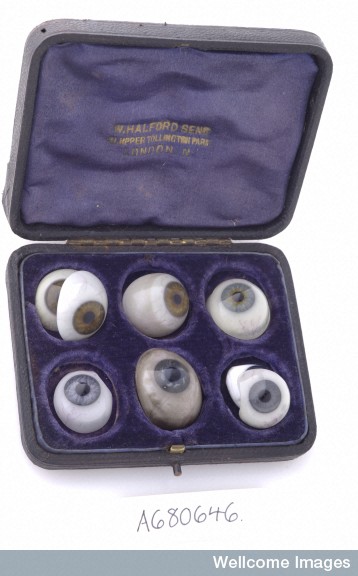
Science museums can feel unfriendly to artsy types, but at the Wellcome, the two disciplines interact. Upstairs, in the cool white Medicine Now room, slides of organs are displayed alongside barmy art (there’s a giant purple jellybaby as a metaphor for human cloning). Downstairs, in the darker, more anthropological Medicine Man room, you’ll find a wall of antique forceps and some beautifully detailed glass eyes which could easily be items of jewellery or sculpture. Plus, there’s a Bosch painting, and everyone loves a good Bosch.

But I think what I love the most about the Wellcome Collection is that, in a manner of speaking, I’m in it.

I have Marfan syndrome. The National Marfan Foundation explains:

Marfan syndrome is a disorder of the connective tissue.

Connective tissue holds all parts of the body together and helps control how the body grows.  Because connective tissue is found throughout the body, Marfan syndrome features can occur in many different parts of the body.

Marfan syndrome features are most often found in the heart, blood vessels, bones, joints, and eyes. Sometimes the lungs and skin are also affected.  Marfan syndrome does not affect intelligence.

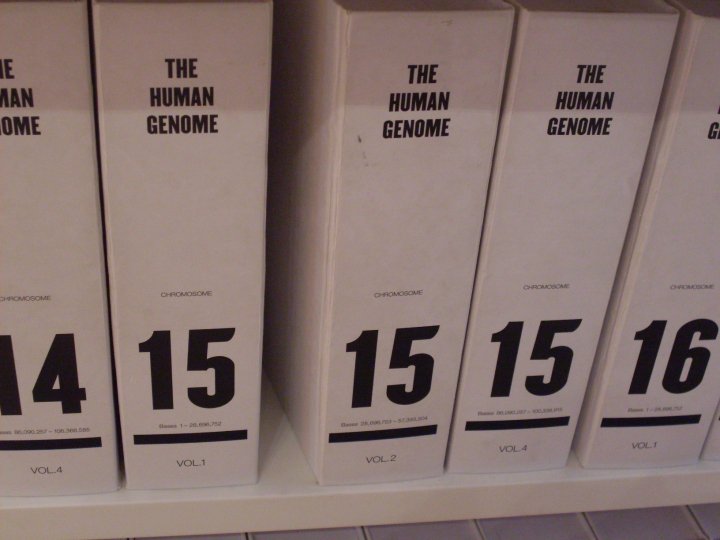
Specifically, Marfans is caused by a kink in the fifteenth chromosome. So imagine the surreal excitement I felt when I turned a corner in the Wellcome Collection and came across this:

There it is. The Human Genome Project, chapter 15, subheading ‘Verity’s Wonky Genes’. I took it from the shelf with both hands. Buried amongst the reams and reams of baffling code inside was the string of glyphs that spelled out Marfan Syndrome.

Only one in five-thousand people have Marfans. The syndrome will generally make you around six feet tall and willowy in build, with exceptionally long, spidery fingers and toes. You may have a curvature of the spine or an uneven ribcage, and you can probably bend your thumbs into strange angles. Abraham Lincoln probably had it, as did Jonathan Larson, Joey Ramone, and, I strongly suspect, Lux Interior of The Cramps.

Marfans can affect you in all sorts of strange, annoying, sometimes life-threatening ways. Individual Marfs differ. As for me, I’m well looked-after by good doctors. I pace myself, I watch my diet and try not to be a stubborn ass when it comes to clinging to the barrier at Morrissey concerts or vigorous charity shopping the weekend after minor heart surgery. (Although holding hands with Morrissey and acquiring an antique nursing chair for £10 were worth the resulting drama).

One of the things about having an unusual health problem is that you can end up feeling alienated. That’s why I love the Wellcome Collection. Things that could be clinical or morbid, like Jennifer Sutton viewing her old heart after her successful transplant, are greeted with curiosity and joy.

It’s an ambition of mine to get Marfans into the Wellcome more prominently. Short of standing in the entrance hall with a sign on me, I don’t know how to raise awareness. I’m not quite ready to donate my hands. But it’s a syndrome that really lends itself to art. Maybe I can use my nonexistent artistic ability to chop up my MRIs in a nice lightbox, or draw an Edward Gorey-esque bunch of spidery fingers. Or, better still, persuade someone  who actually knows what they’re doing to put Marfans in front of the lens, like Alexa Wright’s ‘After Image’ series.

Where’s an artist when you need one?


It’s been one of those summers.

I took a short writing holiday at the end of last month. There were graphs and coloured pens and a real teapot. Strictly no gin, and no Internet – serious stuff. During those four days, I rediscovered the immense mental health benefits of just knuckling down and doing the one thing in life you truly want to do. Surprisingly, I also came to appreciate how the everyday commitments that keep you from writing can be useful. The frustration steels your determination. There must be a proverb to that effect floating around. Probably by Hafiz.

The result is that the novel is so much closer to completion and I’m so much more buoyant about life in general. And also petrified. I’m human.

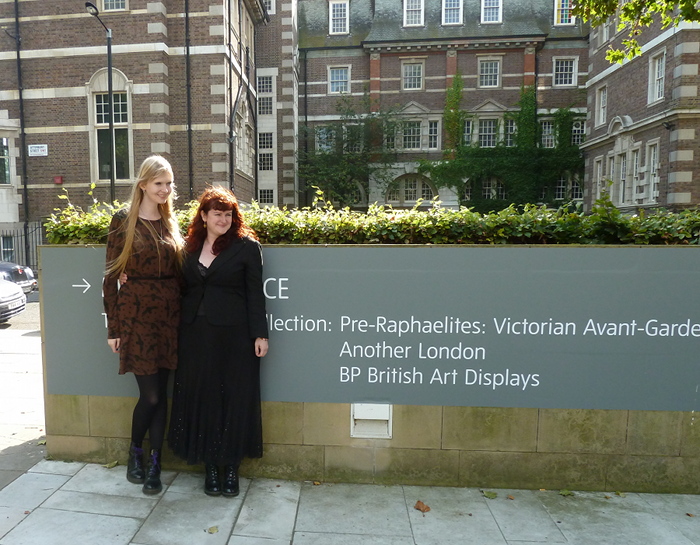
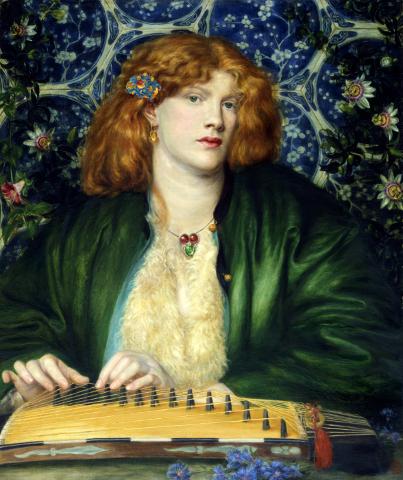
On the subject of terror and joy, today is exactly one month away from my visit to the Tate’s Pre-Raphaelite exhibition. How am I going to contain myself in the gift shop? What am I going to wear? How am I going to stop myself from standing in front of a minor sketch with my hand clamped over my mouth, whimpering “isn’t it just the most wonderful thing in the world?” like I did to some poor man at the Fitzwilliam who was just trying to be friendly by pointing out the extra piece of paper Rossetti had glued on to extend Alexa Wilding a few inches.

“[Rossetti] did not sleep, and neither did he compose himself to rest, though the lamps of the carriage were darkened by their shades. During the greater part of the night he sat up in an attitude of waiting, wearing overcoat and hat and gloves, as if our journey were to end at the next stopping place.” – Hall Caine, Recollections of Rossetti.

You and me both, DGR. See you in London!

Rossettifest – the Rossettis at Highgate Cemetery with Dinah Roe

Yesterday, I hopped on the train to attend another talk at Highgate cemetery, this time by Dinah Roe, author of The Rossettis In Wonderland: A Victorian Family History. A great chance to meet up with friends and talk about my favourite thing in the world – the wonderful, strange Rossetti family.

Jan Marsh had advice for Dinah when she embarked upon Wonderland: “Be careful not to let Dante Gabriel run away with the story”. Sure enough, DGR Superstar wasn’t centre stage last night. Instead, Dinah focused on those family members interred at Highgate:

  • Mother Frances, who quoted Byron in her commonplace book and wished her children had been born with a little less genius and a little more common sense.
  • Father Gabriele, revolutionary poet, exile, and prime example of how excessive close-reading under the influence of the Freemasons will do you no good.
  • Daughter Christina, the baby of the family, who struggled with feelings of under-achievement. (What hope is there for the rest of us?)
  • Son William, The Dependable One, who made his mark as Pre-Raphaelite chronicler and a respected critic of art and literature.
  • Daughter-in-law Lizzie Siddal, grudgingly accepted into the family, perhaps only after her death.
  • The three Polidori aunts: Eliza, Charlotte, Margaret. Intimidating, witty and tough.

Italian, exiled, religiously and intellectually radical, the two families were always going to encounter suspicion in Victorian England. Viewing themselves as Londoners first and foremost, they tended to close in on themselves for emotional and creative support, creating an intense environment that makes for a fascinating talk in a pseudo-medieaval chapel whilst sheltering from June rain.

What I enjoyed most about Dinah Roe’s talk, and the book, was that she allows space for the family to be tremendously funny and surprising. It’s all too easy to take a High Romance view of the Rossettis, obscuring their wit and affection. These were, after all, the siblings who liked to roll around on the floor, re-enacting violent deaths from the novels of Walter Scott.

Thanks to William chronicling the Pre-Raphaelite Brotherhood’s every move, we know that the critics called Dante Gabriel and the other PRBs ‘young gentlemen with animal faculties morbidly developed by too much tobacco and too little exercise’ – which sounds great – or, in other words, ‘unmanly’. Because being feminine is the absolute worst of the worst, obviously. You might as well be some kind of mollusc.

The unmarried Polidori sisters, on the other hand, were comparatively macho. Wearing threadbare unfashionable dresses, striding across decks, appreciating ‘pretty boys’, and healing the wounded alongside Frances Nightingale, these weren’t women content to sit at home and embroider. I shan’t recount all their adventures here, but if you’re in need of an antidote to the Victorian matriarch – read the book.

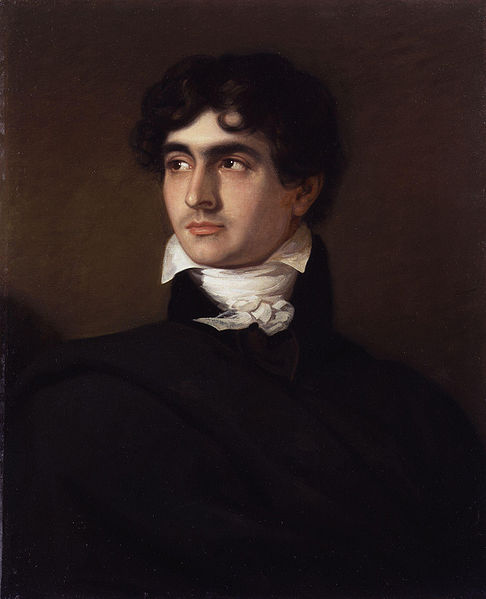
I was inordinately pleased to hear the Polidoris getting some attention. John Polly-Dolly Polidori, author of The Vampyr and possibly the first man to deliberately hit Lord Byron with an oar*, is a favourite of mine. He must have been the coolest uncle for a romantically-minded bunch like the Rossetti children. This rather fetching portrait hung in the family home. To be reading Shelley as teenagers and knowing their uncle knew him, bickered with him, and eventually shared a similarly sad, early death, must have been yet another reminder that theirs was a very special family indeed.

The highlight of the evening – and I’m about to betray my geekiness here – was the inclusion of three recipes from the family cookbook. Histrionic Gabriele hated English food, so his wife duly replicated Mediterranean dishes for him throughout their marriage: Macaroni soup (containing a mere 2lb of beef), a cheeseless lemon cheesecake allegedly safe to store for six months, and a sugary rum punch Christina called ‘grog’. If I ever feel like adding diabetes to my list of ailments, I’ll give them a go.

Something interesting happened when the floor was opened to questions. A lady asked a question I’d asked Lucinda Hawksley last time: does anyone know what happened to Lizzie and Dante Gabriel’s stillborn baby? I’ve never found the slightest clue. So, if you know what generally happened to stillborn babies in the mid-Victorian period, chime in.

As always, Highgate is the loveliest possible place to gather for a talk. The staff (who now know my boyfriend and I by name – have we been spending too much time there?**) are friendly and sympathetic to the misguided compulsion that sends guests creeping up the steps to the unstable west cemetery, where you’re as likely to stumble upon a Victorian luminary as get brained by a falling tombstone.

It’s always lovely to meet other PRB enthusiasts, and Dinah Roe was no exception. Especially in the rain, when I was glowing under the influence of one too many £1 glasses of Highgate red wine. The Rossettis will have that effect on you.

* See Benjamin Markovits’ Imposture (Byron Trilogy) for a fictionalised account of John’s adventures.

** I have a thing about visiting Highgate in inclement weather. The first time, on a snowy Valentine’s day out, my boyfriend and I managed to get ourselves locked in after twilight closing time. So, on one hand, we had to lurk around the gate and beg a passing couple to alert the gatekeeper, but, on the other, we now get to reminisce about “the time we were locked into a Victorian necropolis…on Valentine’s day. Sigh.”

The Victory of The Victim

Thank you to everyone who has already downloaded Contraindications.

We arrived back in London two days ago to a dismal reception of rain and royalty, but I could talk for weeks about Venice. The aftershocks of the earthquake 80 miles away (which I mistook for one of my dizzy spells until the doors began to rattle); Watching dumbstruck from our darkened kitchen as a tremendous electrical storm battered Lido with white strobe light; The sad sight of St Mark’s Square flooding at night, as if the Doge had left his bath running…

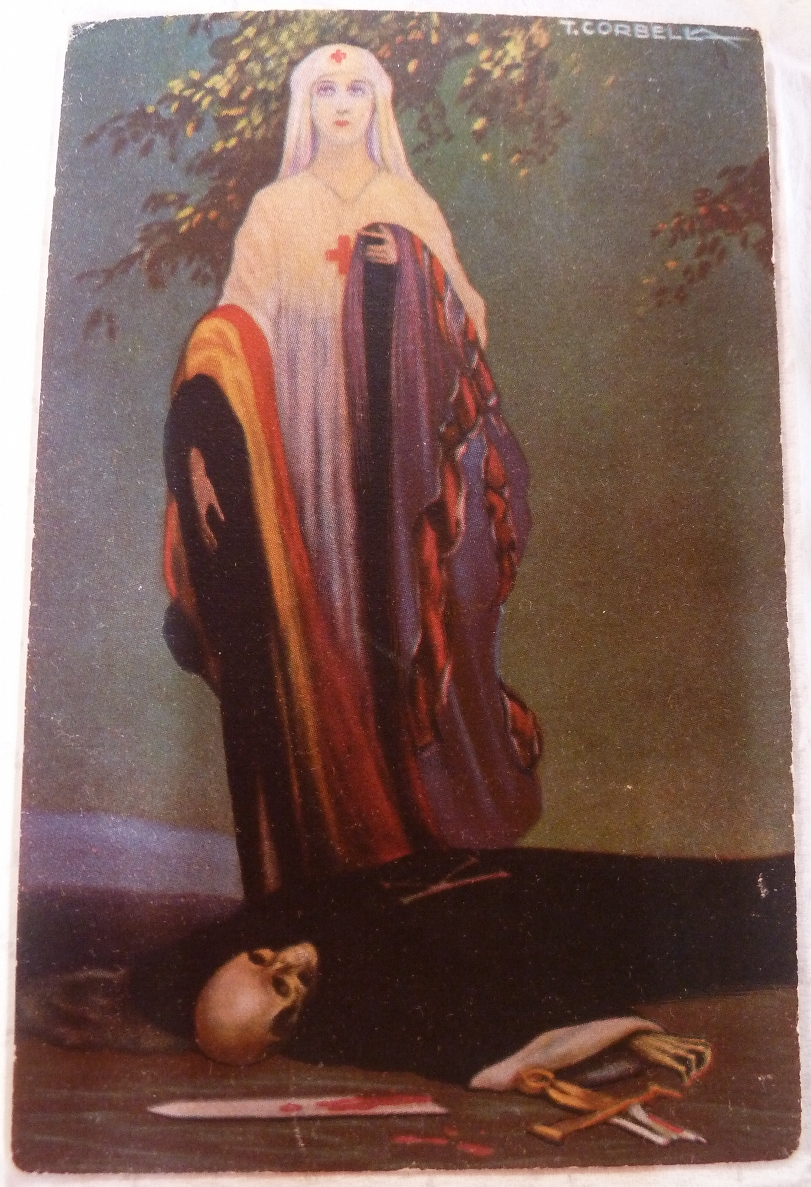
But of all the wonderful things the city had to offer, my favourite was this 3 Euro postcard.

I found it – along with some startlingly expensive tin ex votos – on a market stall run by two little old ladies who managed not to laugh at my bad Italian.

After scampering away with my prize, I wondered if the skeleton was King Cholera, hence the K, but after some Googling, it turns out that this postcard is called The Victory of The Victim. It’s the final card in a series of six commemorating the shooting of nurse Edith Cavell in 1915. Here they all are, in their shameless gothic glory. Higher resolutions scans of four can be found here.

I’ll admit I don’t know much about Edith Cavell beyond the fact that she was from Norfolk and that, by killing her, the Germans created an Allied martyr whose image went global in days. And it’s little wonder. Artist Tito Corbella, usually so frothy and Art Nouveau, turned Cavell into a Madonna-like wraith wafting around on a background of bloody hellfire, while Kultur (the symbol of German supremacy, replete with cloak and harpsichord) might as well be played by Peter Cushing. For someone so accustomed to painting pretty pastel frocks, Corbella had form when it came to propaganda.

Interestingly, the English batch of Corbella’s postcards were printed in London’s Red Lion Square, where Rossetti lived on two occasions. Small art world.

The idea of an international martyr from Norfolk is a touch surreal. It’s Norfolk. Norfolk. That flat black wasteland of impassioned fiery doom, and… Bernard Matthews. And the image is so Italian. That stare. Those fetishised silent film lips. I love it. What a find.

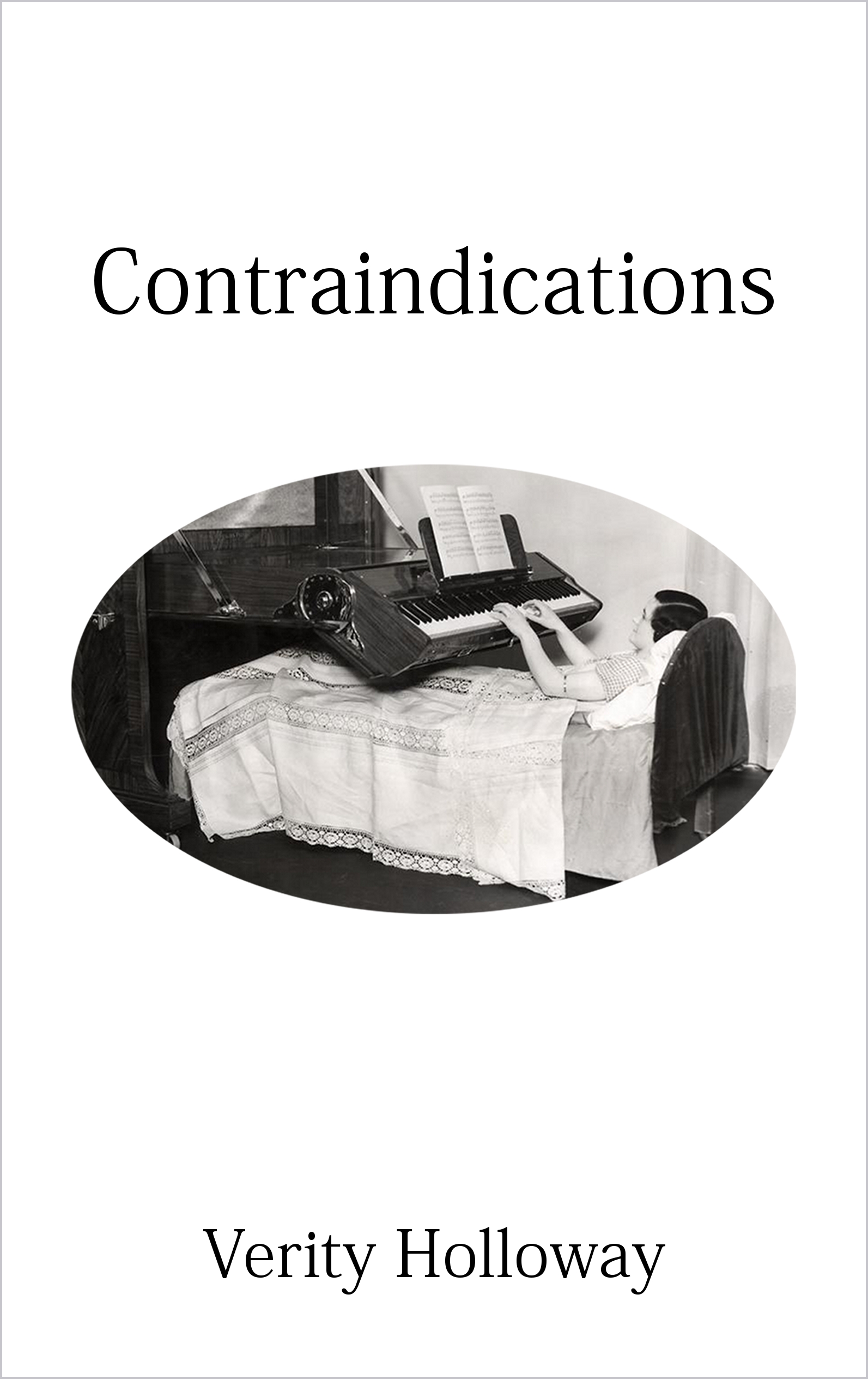
Contraindications: a chapbook of six poems

Today, on my 26th birthday, I’m presenting my chapbook of poems, Contraindications.

I’ve been putting together Contraindications for a few years. Various poems have been floating around in magazines, and I think it’s  time to unite them neatly.

Unsurprisingly, they stem from passing through the medical system. Marfans, PTSD, eating disorders; they all have to go somewhere. These poems are what I was working on while I should have been filling out those forms asking “on a scale of one to ten, how much difficulty do you have concentrating?”.

Sewn together into a little white book, perhaps it isn’t neat at all. But neither am I.

It’s free to download and only available here, for the time being. Ebook publishers have a way of mangling the format, and I like to have control.

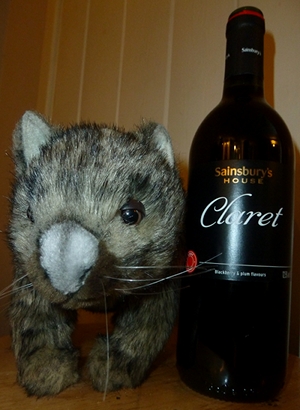
Fifth of May is Claret Day!

While I was researching my Masters dissertation on Dante Gabriel Rossetti, I was lucky enough to handle his notebooks in the British Library. Tiny little things, like books of stamps, leather-bound, and in my hands. I was delirious. One of the happiest days of my life. All those poem-snippets, the cryptic notes to himself, the fingernail sketches. He felt so close, as if when I went on my break he’d be there in the café to meet me for a cup of tea.

Amongst many sad things and many funny things, this note on one of the 1870s pages caught my eye:

MAY 5 – CLARET

No indication of whether he was referring to wine or just the colour, or why the date was significant. But since then, every year on May the fifth, I’ve bought a cheap bottle of red plonk and enjoyed it in honour of the dear old DGR.

Yes, you have to involve a wombat.

Happy Claret Day!

Our compliments to your little sweetheart

Guess where I’ll be this time next month…

I’ve got my panama hat, my natty spectacles and the rouge is bleeding down my cheeks. But the boys of Venice are safe. I’m taking two of the British variety with me.

I’m more excited about Poveglia, the abandoned island two miles out into the Lagoon. A  quarantine/burial ground during the black death, it’s practically unvisitable these days, unless you find a very, very nice man with a boat, but even then, it’ll involve parting with quite a wad of Euros. Nowadays, the only inhabitants are packs of dogs running wild in the ruins of the old hospital there.

Poveglia has had a few uses over the centuries, most of them grim. In the ignominious tradition of dumping all our cultural anxieties onto the mentally ill, there are the usual regurgitated stories of rogue doctors throwing themselves off the tower of the psychiatric hospital operating there in the 1920s. TV ghost hunters enjoy telling American viewers how the soil is 50% human ash following the hasty mass burnings in the wake of the plague. Although there is a vineyard. Silver linings.

Deliciously dilapidated, it’s been described as “a great big ball of darkness, death and hauntings”  – picnic time! I’ll take Bonios for the wild doggies.

It’ll be good to get out of the UK. I’ve realised that the editing process is going to be much harder than I expected, and staring at the same pages every day is getting me down. The wet weather has been playing havoc with my knees – thanks, Marfans – so some sunshine wouldn’t go amiss.

Did Dickens snub my uncle?

I have difficulty with Dickens.

I acknowledge the fact that he’s arguably the supreme symbol of the Victorian age I love so much, and yes, I adore his description of Miss Havisham’s rotting wedding cake. Say ‘speckled-legged spiders’ out loud. It’s beautiful. There are many things to like about Dickens, and I know it. But…

1) He was catty towards the Pre-Raphaelites and then retracted his statements as soon as they were popular, in that “I was at all their early gigs” way. Millais may have forgiven him, but I never will.

And 2) My parents took me to Dickens’ house in Portsmouth when I was small. Dad had me sit on the deathbed.* There was a big rip in the upholstery with the stuffing pouring out like guts, and I remember being convinced that Dickens had died thrashing and tearing at the velvet with his fingernails like some hairy roaring beast. Worse was the fact that the courtyard outside the room had recently suffered some kind of paint spillage. Nice, wet red paint. To this day, I have to remind myself during cosy Christmas BBC productions of Great Expectations that no, Charles did not throw himself out of any windows.

I don’t hate him, or especially dislike him. I just have trouble with him. And it turns out, my beef with Dickens may run in my family.

Uncle Tom’s Cabin of Quackery

While my favourite Victorians painted and wrote and exhumed their dead wives, my great-great-great uncle made his fortune selling pills and ointments and then advertising to the point that there were few countries in which you could avoid him. ‘Professor’ Thomas Holloway (although he was as much as professor as I am a raccoon) was a businessman who never missed a trick, a man of strong opinions. It was said that “millions who have never heard of Napoleon … have heard of Holloway”.

We Holloways are generally seafaring people. My dad spent 35 years in the Navy, his granddad did, and his dad in turn. During the eighteenth century, there was a patch in which thirteen of us had a go at petty crime and ended up being deported to Australia. On the same ship. So yes, we’re very nautical. Not so Thomas Holloway. Growing up in a Penzance pub, Thomas began concocting general-purpose ointments in the family kitchen in the late 1830s. Thirty years later, he was a multi-millionaire and living on a 72-acre estate that would later belong to John Lennon.

Like Dickens, Holloway rose to become one of the Victorian leviathans. Until recently, I had no idea whether the pair met, or even took much notice of each other. So I’m grateful to my friend Thora for pointing me to this article on The Quack Doctor detailing an amusing alleged incident between Holloway and Dickens…

The Professor, audacious in pursuit of a deal, supposedly sent a substantial cheque to Dickens in the hope of persuading him to highlight his ointments and pills in Dickens’ next novel. Product placement. What followed was a bitchy rebuff from one Enormous Victorian to another. It’s a brilliant piece of gossip, and I recommend you go and read it.

May Contain Traces of Nothing

I have a small collection of Holloway’s ceramic ointment pots and advertisements. They promise ‘all good nurses’ rely on Holloway’s products, which is just as well, as his pills promised to cure everything from bronchitis to gout, period pain  to fistulas. These were the days before advertising standards, when you could legitimately publish an ad asking DO YOU WANT YOUR CHILDREN TO DIE?

Thomas Holloway’s advertising was ruthless. If he were alive today, he’d be the mastermind behind those impossible-to-avoid “lose 2st with this implausible old tip” ads. Dickens commented on this in Household Words, joking at how terrible it would be to have psychological baggage attached to pills and ointments – Holloway’s posters were so ubiquitous, the victim would never escape their torment.

The trouble with Holloway is that, like Dickens, I don’t know how to feel about him. I admire his rise through society, but the medicine itself was pure fluff. Being a chronic invalid myself, I can’t shake the suspicion that The Professor brought down a karmic curse upon the family after all those years of fooling nannies into feeding their poorly charges something about as nutritious as Smarties. Deciding whether he was a goodie or a baddie all hinges on whether or not he knew it was fluff, and, unfortunately, he did.

It’s like that episode of Armstrong and Miller where Armstrong goes on Who Do You Think You Are?, and it turns out that each and every one of his ancestors were whores.

Although Thomas was aware his medicine was fluff, he claimed that the hundreds of letters he received from happy customers were all he needed in the way of proof he was doing good. His understanding of the placebo effect was pretty advanced, and he seemed never to view his customers as chumps.

So not dastardly exactly. She says. Hopefully.

As a philanthropist, at least, he was a good egg. He gave around one million pounds to charity and founded the uber-gothic Royal Holloway College for women which one of these days I’ll get around to claiming as my ancestral home. Considering it took until 1948 for Cambridge to grant full degrees to women, that was quite a progressive decision on face value.

But that’s all business. On a human level, he’s hard to pin down. As someone who deals in fiction, achievements don’t mean as much to me as characteristics. I have only snippets, like how, in the early days, he and his assistant would celebrate making a new batch of pills by having a good sing-song. His personal motto was “nil desperandum”. He worked hard, even on Christmas Day. From the few personal letters I’ve read, I can certainly say he was funny, but tending towards the melancholy. Like the rest of us Holloways, he was over six feet tall. He had a magnificent quiff.

This Isn’t Over, Charles

So did the snub actually happen? Leslie Katz’ paper “Dickens and Product Placement: Did He Refuse an Offer from ‘Professor’ Holloway?” concludes ‘probably not’. The story came from notorious fibber and owner of the gossip paper The World, Edmund Yates (What? A Victorian? Making something up?) after both parties had died. Although it’s a stunt The Professor was forward enough to try, there’s no proof that he did.

Which is a shame, as The Professor could be pretty catty himself, and the fallout would have been hilarious. Paraphrasing his estimation of William Makepeace Thackeray:

“That Mr. Dickens may think himself a very clever man; but I fancy that I could buy him up, ten times over.”


* Come to think of it, I doubt I sat on it. But in my traumatic memory, I was basically made to rub my face on Dickens’ hairy death-sofa.


The pictures: At an antiques market, I came across the satirical poster shown above. The coin (a gift token) is stamped with Thomas’ bequiffed profile and was a present from my dad.

The Girl In The Yard

Lately, I’ve been reading Peter Ackroyd’s The English Ghost: Spectres Through Time, a compendium of hauntings scattered across English history. I love Peter Ackroyd. He is my favourite walrus-shaped historian. I once had a dream in which we were best friends and he’d allow me to lounge around on scatter cushions in his flat at the top of an old London warehouse, reading his tomes while he organised his cravats*.

Being a series of short witness-accounts of strange occurrences, there are a lot of ghosts to take in. Just when I’ve decided on a favourite, Peter Ackroyd presents me with something twice as horrible oozing out of a seventeenth century cupboard and I have to revise my leader-board accordingly. There’s the bodiless entity creeping around Ely, punching people in the side of the head. Then the man in the dripping raincoat, who seems to love being run over on the A38 again and again. And I couldn’t leave out Borley Rectory, the supernatural fire-safety story. Whether you believe in them or not, the history of England is riddled with boggarts, bugs, wraiths, shucks and clabbernappers.

So here’s my contribution.

I was nineteen and living alone in a flat in one of the three-storey Victorian houses on Cambridge’s Chesterton Road. The ceilings were high, the heating was sluggish, and the basement flat – for some unknown and therefore definitely sinister reason – was only ever rented to men. The men had two entrances separate to the main building where the women lived. One was at the front, down a set of steps behind some iron railings, and the other was down another set of steps in the paved yard out the back. It was here that I met my ghost.

It was an old house but it wasn’t a creepy one. I had a room on the ground floor, with a miniature kitchen, a computer desk in the old fireplace nook and a small wall-mounted bookcase with closed sides, packed tightly with books. I never saw the other residents, even in passing, (I kept student hours), but I liked it that way. Only one or two odd occurrences made me pause. The first involved the bookcase.

Quite often, when I came in from my classes at Anglia Ruskin, my books would be on the floor. The one I usually found six feet from my little bookcase was Literary Theory: An Anthology, 1336 pages long, weighing as much as a carrier bag full of sand. If it had slipped off the shelf, it wouldn’t have bounced cheerfully across the carpet for such a distance. But it did, repeatedly, and only while I was out.

This didn’t worry me. My half-serious theory was that some disembodied visitor objected to the cover art – a Victorian surgeon contemplating an inappropriately alluring female corpse – so I’d apologise out loud and place the book back on the shelf. The ‘rearrangements’ kept happening, but they weren’t distressing. I wasn’t expecting a one-to-one audience with a full-body apparition.

As it happened, the afternoon I saw her, I wasn’t alone. My dad had come over from Ipswich to visit, and we were out in the yard. He was subjecting my bike to a bit of no-nonsense-Navy-engineer maintenance. He wanted me to cycle back and forth from classes, but I’m a ditherer, and cycling in a city seems like just another way for me to end up in hospital. My bike had lain dormant for months under a plastic sheet, and dad was grappling with it in the small bike shelter as I loitered a few feet away by the steps leading down to the men’s basement flats.

I don’t know what made me turn around. But when I did, I was facing a young woman holding a tray. Her muscles were in the process of dropping the tray – a kind of frozen flinch – because I’d startled her. Which, I suppose, was natural, as she was a maid in a long blue dress and apron and I was a six-foot vision of the future in drainpipe jeans and smeared eyeliner. She was solid, around five-feet-seven, dark-haired, and her uniform was similar to this unnamed girl’s on the right.

I registered all this within the space of two seconds. There wasn’t time to speak. She was gone. She didn’t disintegrate, or fade, or even just wink out. I can only say that she simply wasn’t there any more.

Rather than the ice-crystals-in-the-blood shock so many people in Peter Ackroyd’s book reported after meeting with ghosts, I felt guilty. I wasn’t frightened, but she most definitely was. I think she must have dropped her tray, whenever the connection faltered and she found herself alone. I turned back to dad, who was still engrossed in my flat tires, and never mentioned the girl to him.

In The English Ghost, Peter Ackroyd describes the categories of hauntings: the conscious souls of the dead, the replaying of actions, nature spirits, omens good or bad… but I believe my ghost wasn’t a ghost at all. I think there was a glitch in time; a window allowing us to see each other. Perhaps the moving books were a symptom of whatever quantum hiccup was focused on the house. It’s fun to speculate, and I especially like the possibility that maybe, just over 100 years ago, a parlour maid rushed back into the scullery after breaking a trayful of china, and told her friends about me – the girl in the yard.

* There’s still time, Peter, if you’re reading this.