The strange, corporeal afterlife of James Legg

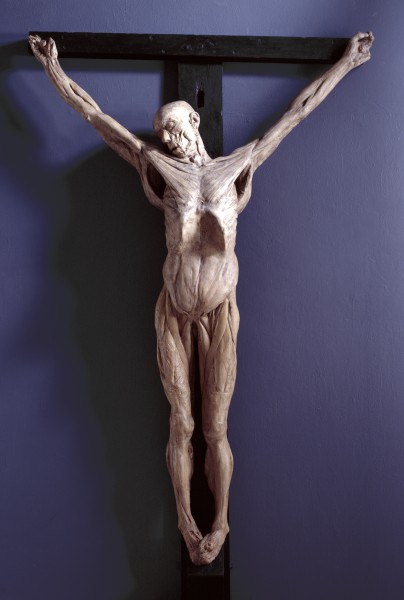
If you were lucky enough to catch Doctors, Dissection, and Resurrection Men at the Museum of London, you’ll remember this fellow…

James_Legg

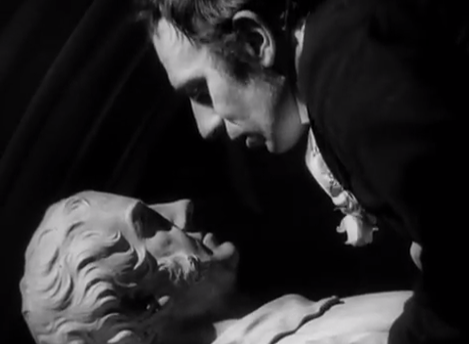
This is murderer James Legg. In 1801, the 80-year-old Legg challenged a fellow pensioner, Lamb, to a duel. When Lamb refused, throwing the pistol to the ground, Legg did the ungentlemanly thing and shot him anyway. Although apparently well-received in the courtroom, not to mention the ramifications of his advanced age and plea of insanity, Legg was sentenced to be hanged on the 2nd of November, and his body dissected.

Meanwhile, sculptor Thomas Banks and painters Benjamin West and Richard Cosway had always wondered if artistic representations of Christ’s crucifixion were anatomically correct. How they justified this is a mystery (“It’s for art, dears, art”) but surgeon Joseph Constantine Carpue apparently saw no moral issue with procuring the hanged Legg’s body fresh from the gallows and crucifying it in situ. The four men created two casts, one with skin on, one with skin off. The casts were moved to Banks’ London studio, where they attracted much attention from the curious public before being displayed for art students in the Royal Academy.

The ‘experiment’ still brings up uncomfortable questions about ownership and consent. But awfulness aside, the cast is incredible, and enormous. Legg must have been an imposing young man if he were that size at 80. The photograph is somehow more dreadful than viewing it in person. Perhaps it was the low light of the exhibition, or the woman sat at his feet, sketching, but I found it rather beautiful.

When I first set eyes on James Legg’s plaster remains and learned of his strange corporeal afterlife in the RA, I hoped Dante Gabriel Rossetti would have seen him. The student Rossetti hated drawing from sculptures in the same way most of us hated doing our times tables, but this is the boy who, dismayed by the sight of cancan dancers’ petticoats, took William Holman Hunt to a Parisian morgue to view a drowned man. On holiday. For fun. (He was a pleasant traveling companion, wrote Hunt, for certain values of pleasant.)

I think he would have loved James Legg.

Rossetti’s prolonged phase of reveling in the macabre produced some amusing works and letters: the ballad Jan Van Hunks about a smoking contest against the devil (DGR never smoked), general delight in ‘stunner’ murderesses and all things Poe. A cast of a flayed murderer would probably have persuaded him to pay more attention in class.

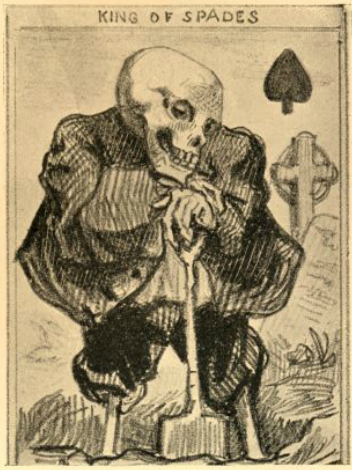
Playing card, 1840

Look at this jaunty little Death, done in 1840. Note the odd leg bones. It was never meant to be a serious anatomical study, but the disregard for details is there. “I have nearly finished studying the bones,” he wrote to Mamma Francis in 1843, ” and my next drawing will most probably be an anatomy-figure.” He sounds bored to tears.

Sadly, the cast of James Legg was removed from the RA in 1822, seven years before Rossetti was born, and only returned in 1917, thirty-five years after his death, when it narrowly avoided being blown up by a zeppelin bomb.

In light of their commitment to realism and the religious nature of so many Pre-Raphaelite paintings, it is tantalising to wonder how the PRB would have reacted to such a ‘teaching aid’, had it been available.

Although Rossetti would probably argue, it doesn’t matter how accurate the cast – it’s the soul of the thing that matters.

The Most Beautiful Bookshop In The World

shop1

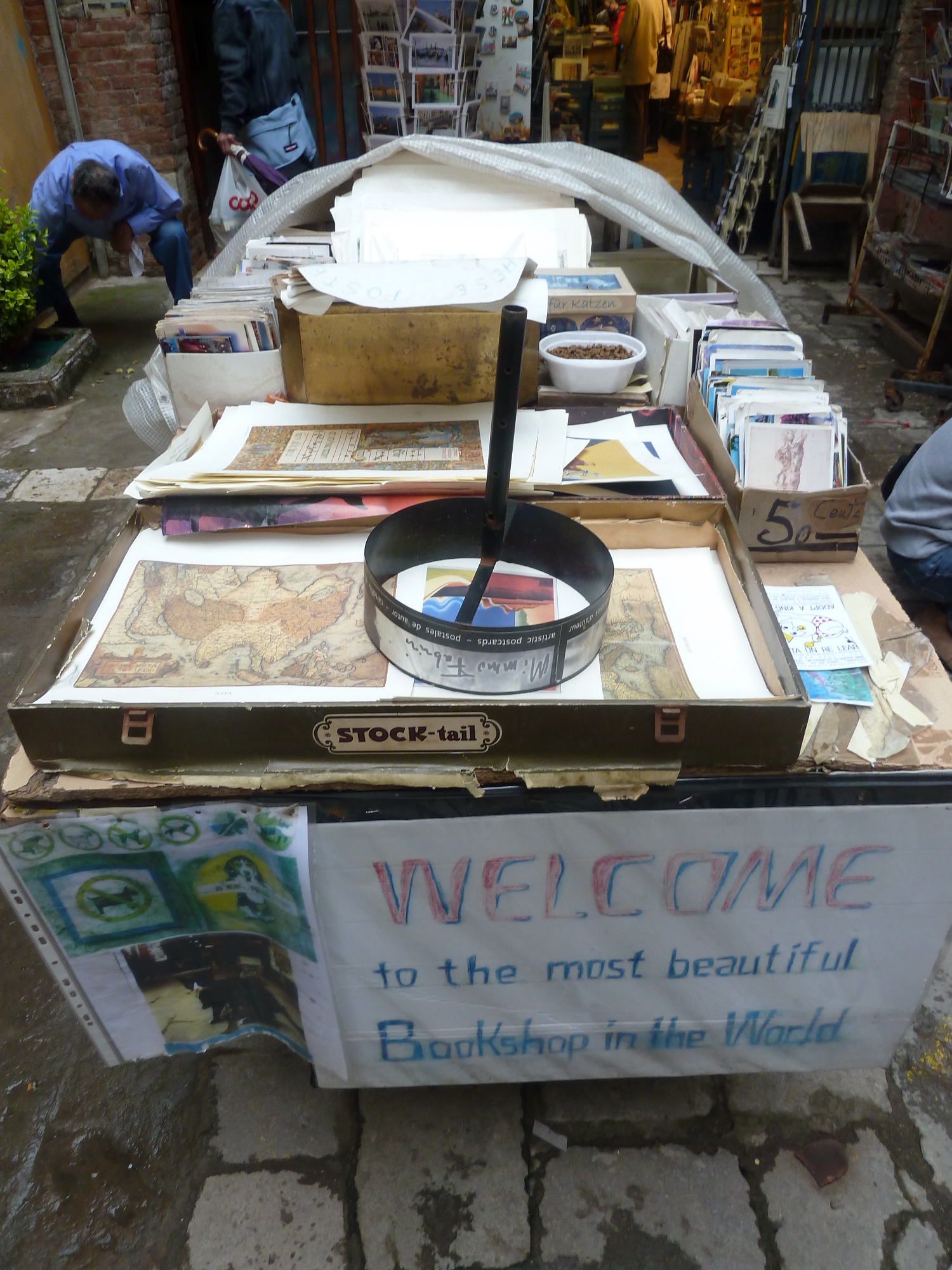
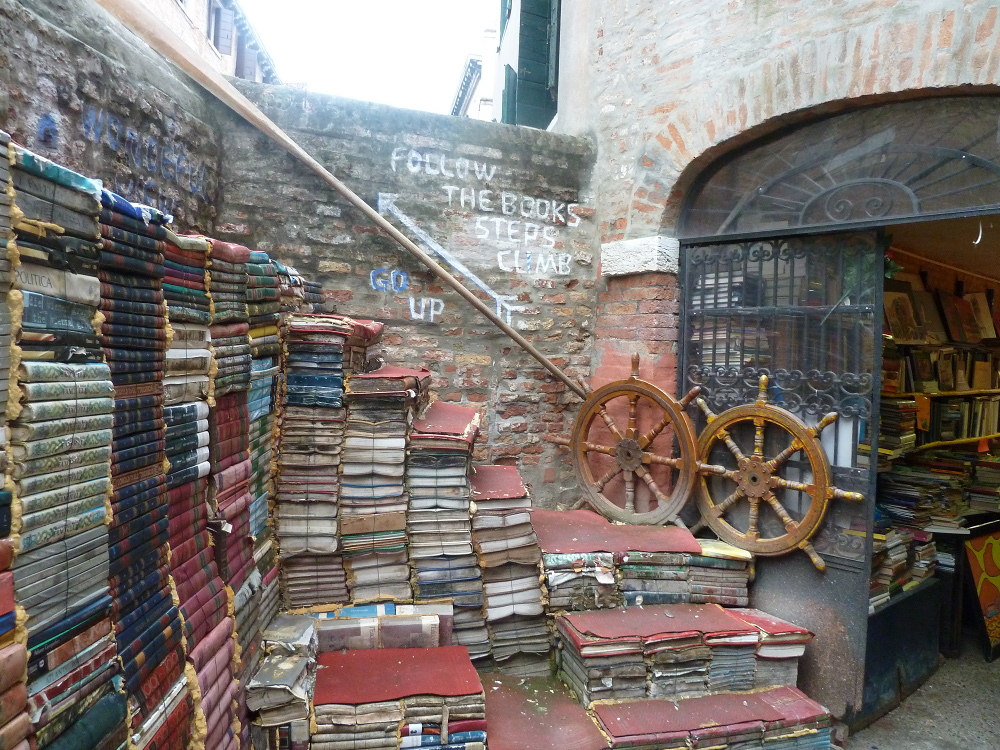
We were in Venice last week, lost, and chilly. In search of the third spritz of the afternoon, we’d taken a walk down an alley, then another, and found ourselves in a tiny, mossy courtyard, when abruptly…

‘WELCOME to the most beautiful bookshop in the world’.

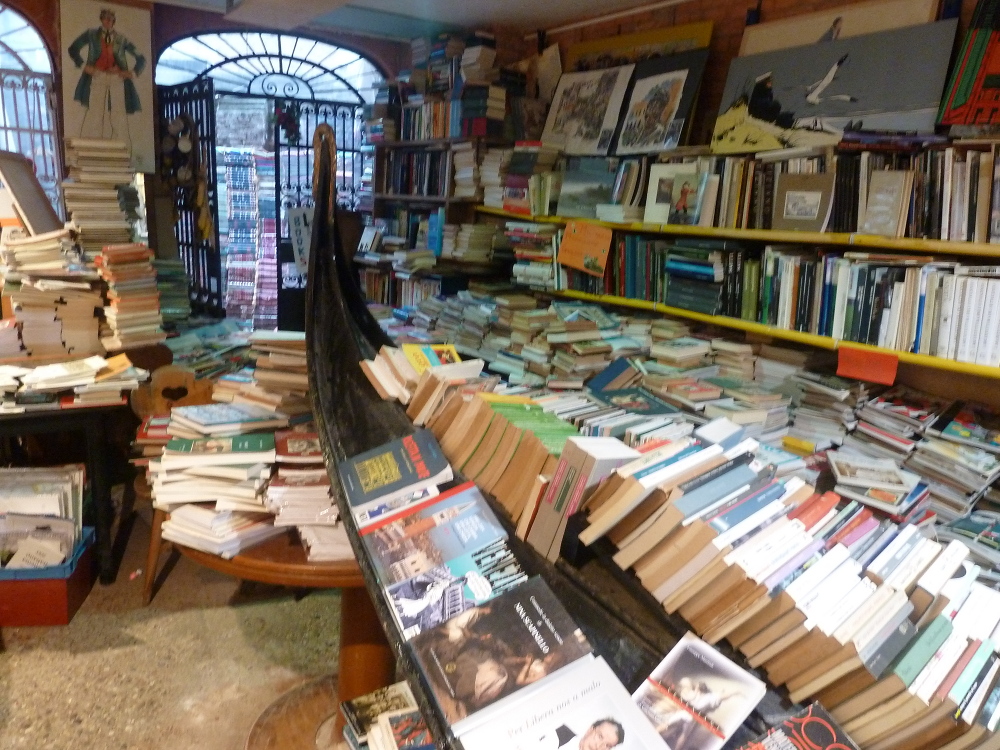
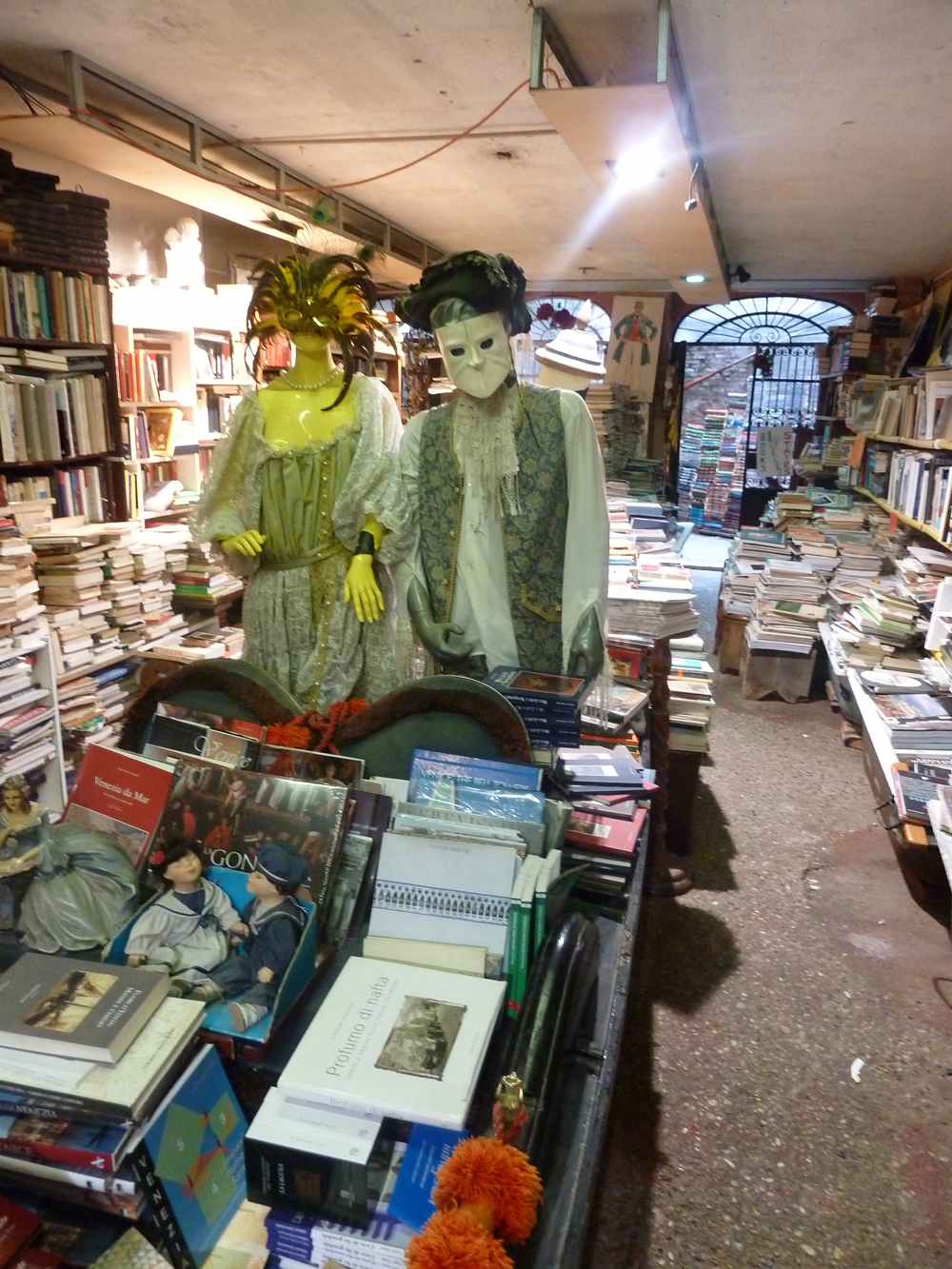
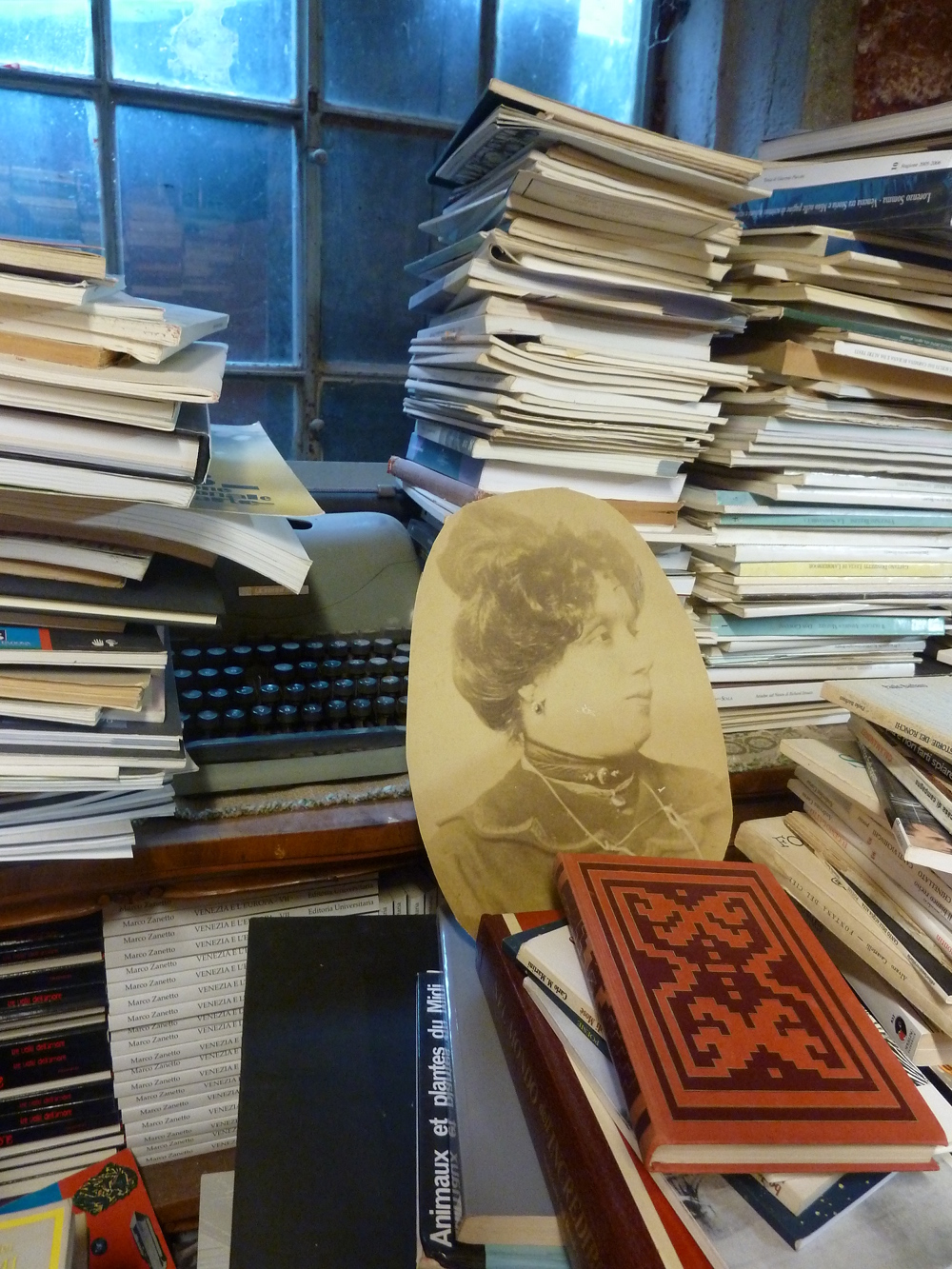
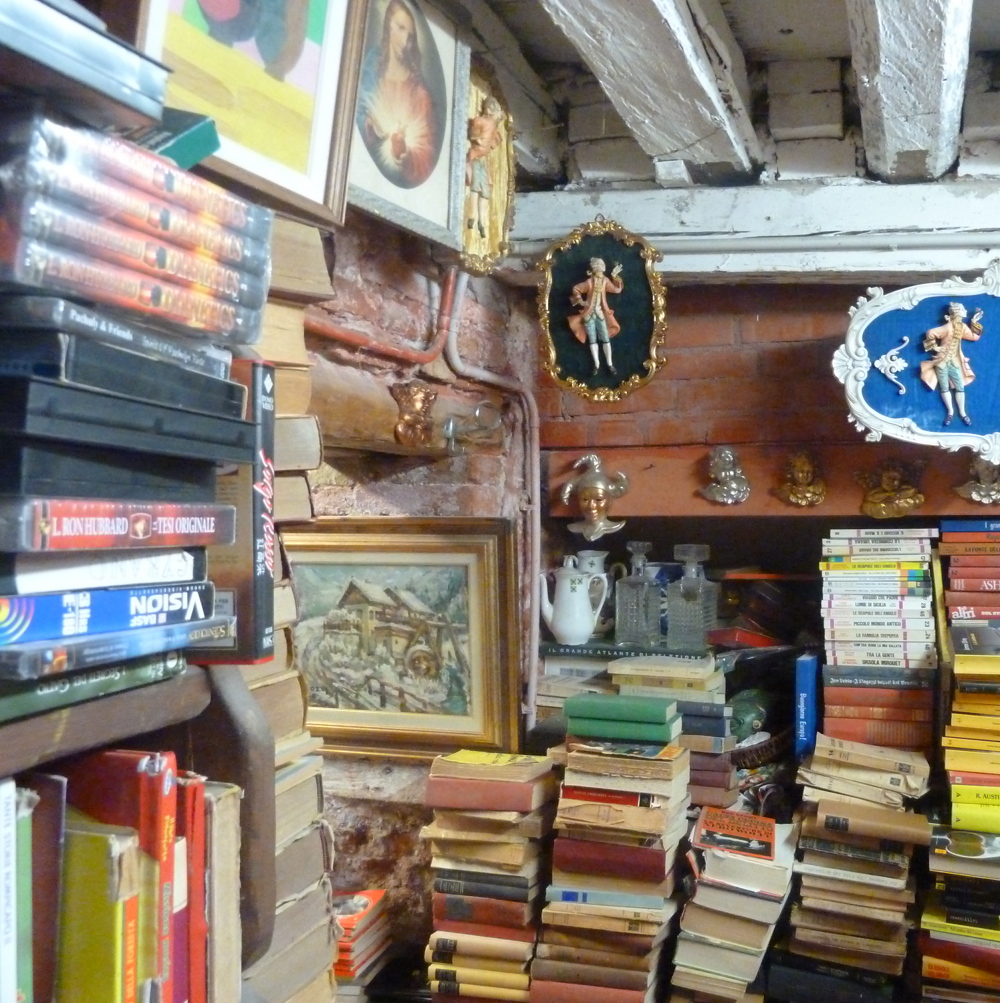
The Libreria Acqua Alta. Part curiosity shoppe, part bottomless book-dump (good luck if you’re after a specific title) the Libreria Acqua Alta “looks like your corner of the living room”, according to Gabriel.

‘Für Katzen’, said a card propped up against a rather damp bowl of kibble. Inside, camera-shy kitties reclined on mounds of catalogues, faded postcards of American government buildings from the 1960s, and reproduction antique maps. In a landlocked gondola, Tintoretto languished with Taschen’s Big Penis Book (3D, in case you’re interested). The sweet, faintly worrying smell of paper-rot bloomed with varying intensity as we delved deeper into the labyrinth.

sales2

shop3

shop4
sale8 I know what you’re thinking. Where’s the fire escape?

shop7Nailed it.

I seem to have annoyed you gentlemen in some way

When Quentin Crisp hennaed his hair and sashayed his way through London in form-fitting trousers and mascara, he generated rage. On one of the many occasions he was dragged off the street and beaten, he managed to raise his head and address his attackers: “I seem to have annoyed you gentlemen in some way”.

There’s been a lot in the news about Sophie Lancaster this week. In 2007, 20-year-old Sophie was beaten to death. She was out walking with her boyfriend in a public park and some boys decided they didn’t like her goth clothing. So they killed her.

Dwell on that for a moment: they murdered her because they didn’t like her clothes.

Sophie’s mother Sylvia heads the S.O.P.H.I.E campaign – ‘stamp out prejudice, hatred, and ignorance everywhere’ – and as a result of her work, Manchester police have announced they will be treating attacks on members of alternative subcultures as hate crimes. I don’t pretend to know anything about the law. I can’t say if this will make any palpable difference. But, personally, I’d like to live in a society that fosters creativity and diversity, especially in something so harmless as individual style.

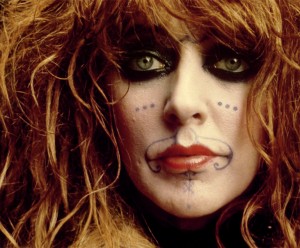
vali-myersWhen the news filtered through to the mainstream press, I’d been reading about the Australian artist Vali Myers. Vali, with her trademark raccoon eyes, red haystack of hair, and tattooed moustache, is such an exciting figure, not only for her outlandish paintings and appearance, but because her chosen adornments were so intrinsic to her sense of self:

“My father used to say to my mother, ‘Vera, how can you let her go out like that?’ But Mum used to tell him it was my war-paint. Believe me, in Melbourne in the 1940s, I needed it.”

I like that quote. Love it, in fact. But I can’t help but think she’d have a Hell of a time on a bus in 2013.

Yes, Vali was an unusual case. But you don’t have to be flamboyant to attract hostility. I’ve been physically assaulted more than once for wearing ‘too much’ black. By grown men, in daylight, on crowded streets. Every single one of my friends who hover in the vicinity of an alternative subculture have experienced street harassment. Sophie’s death was not a freak occurrence, a fact which is all the more bewildering when you consider that goths are, at the heart of it, arty, generally quiet people who like to pose for photographs in castles.

Why not just try harder to fit in?

No.

It makes me happy to express myself. It makes me happy to see other people express themselves. At the railway station in Preston last week, I saw a little old lady wearing so much artfully layered green eyeshadow her face resembled the wings of a magnificent beetle. Was it ‘age-appropriate’? No. Was it fashionable? No. But she looked content and she looked fabulous. It’s a mark of self-esteem and imagination when someone is kitted out in an individualistic way, and I wish more people would.

But Quentin Crisp was right: it annoys people. And it’s a petty thing to be annoyed by; so anchored in ego and personal anxiety. How dare they leave the house like that? The naysayers seem to wonder. And what does it mean? Do they want attention? Do they think they’re better than me?

Well, what if it means nothing at all? What if it’s just …fun?

Everyone is entitled not to like things. But hostile reactions to the harmless creativity of personal style totally baffle me.

Fall into the house of Severs – still life drama at 18 Folgate St

severs1The first rule of Dennis Severs’ house is that you do not talk in Dennis Severs’ house.

Not that you’re given a chance to say anything. As we rounded the corner into Spitalfield’s Folgate Street and rang the bell on number 18, the door immediately opened to reveal a composed gentleman in warm winter clothes.

“Is this your first visit to my friend Dennis’ house? Entry is ten pounds. I warn you, there is a mad cat.”

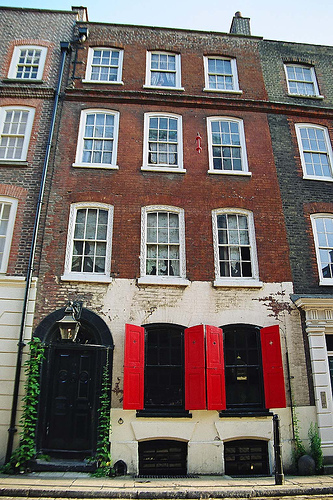
What were we in for? The Californian Dennis Severs moved into Folgate Street in 1979, when the run-down area was attracting colourful types like Gilbert & George. Bypassing frivolities like electricity and modern plumbing, he decorated each of the house’s eleven rooms in the style of a different era, from 1724 to 1914. The aim, or ‘game’ as he put it, was to give the impression the original occupants of the house – the Jervises, a family of Huguenot silk weavers – had just left the room.

Ring the bell, hand over your tenner, and slide into the past.
Photograph by Roelof Bakker

Photograph by Roelof Bakker

The motto of the house, Aut Visum Aut Non (‘you either see it or you don’t’), hints at the ghostly quality of the place. Severs died in 1999. In his Will, he asked the house be kept as it was during his lifetime, still admitting the curious, silent public.

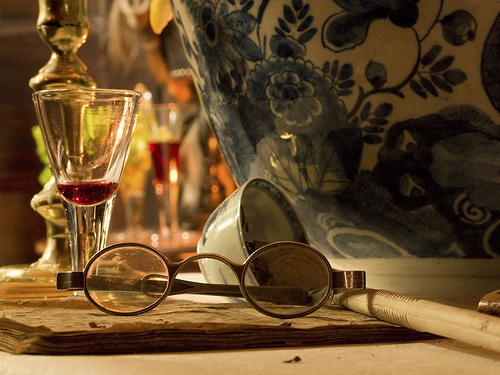
Inside the tall, dimly lit house, you see no ghosts. But you hear them, oh yes. The atmosphere is an entity in itself, following you, touching you. You learn to minimise your movements to avoid the naked flames. You tune into the language of the nibbled scone, the glistening yolk of a cooling boiled egg, the afternoon sherry guiltily abandoned. Upstairs, in the paupers’ room, the collapsing ceiling admits sighs of freezing London air.

“Give a man a mask and he’ll tell you the truth.”

Performance art of this kind offers strange intimacy. I was reminded of Punchdrunk’s incredible 2007 production of The Masque of The Red Death in which the audience were given masks and let loose in the industrial cavern that is Battersea Arts Centre. You could rifle through tattered paperwork, watch contortionists getting violently busy on a four-poster bed, or enter a mad puppet show…but you had to remain silent.
moretta

In my mask, I laid eyes on a boy (man? It was so dark, I couldn’t tell), taller than me – rare, as I’m over six foot – lurking in a chamber of piled silks and wools. He beckoned; I unthinkingly obeyed. Without permission, he laid a velvet cloak around my shoulders and slowly fastened the clasp. Was he gorgeous? I don’t know; I never saw more than his eyes, which I stared into with inebriated fascination for far longer than was polite until he laid his hand on my back – a touch! – and moved me on.

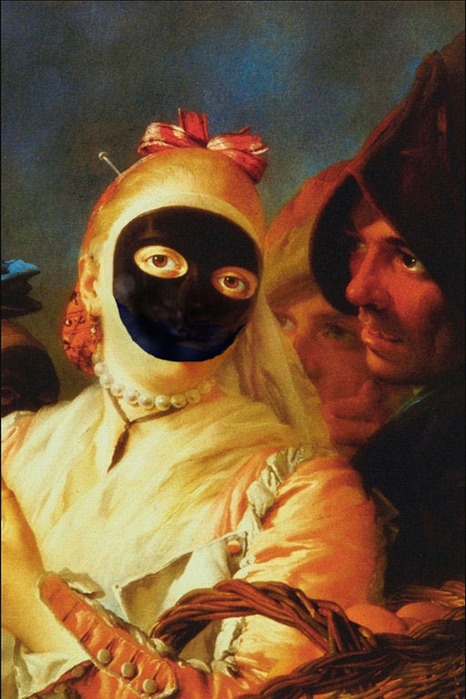
That, I think, is the trick of performance art. Like a parasite, it knows your boundaries and wheedles inside. Think of Venetian prostitutes with their Servetta Muta masks held by a bit between the teeth. Anonymity is intimacy.

“Those in the past were also dizzy and dumbstruck”

Severs left a note for us in Mrs Jervis’ pink confection of a rococo dayroom. To experience the house without sensing the long-gone occupants would be “like celebrating the Millennium as a number, without Christ.” It’s safe to say he took his still life drama seriously. But that heavy statement was interesting…
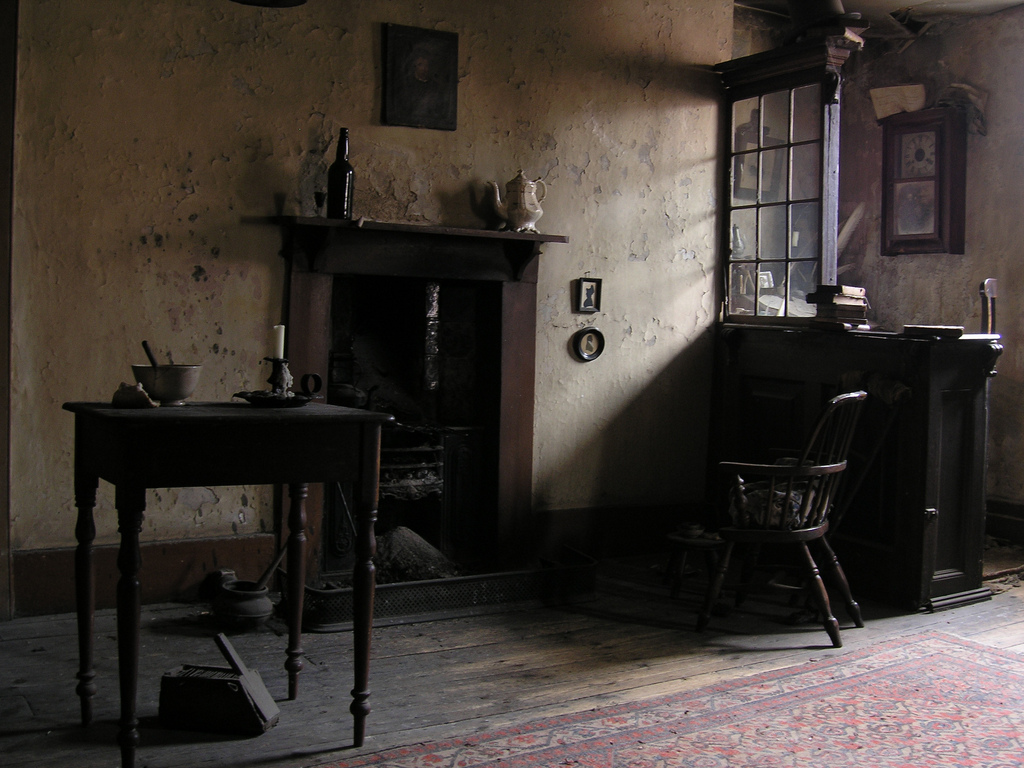
dickensroom“You must forgive the shallow who must chatter,” says another note. We have the Internet, 24 hour news, the telephone with the police on the end waiting for our call. The Severs house recreates the cut-offedness we’ve learned to forget. If you love history, you spend eons inside books offering first person accounts of a moment 100 years old or more, but when you enter the closed atmosphere of 18 Folgate Street, with its strange sounds, strong smells, and unreliable light, you at once feel vulnerable.

But the house is merely a pretty illusion if you aren’t willing to let down your barriers –  a fact brought home by the frequent smacks on the wrist in the form of signs saying, “STOP LOOKING AT INDIVIDUAL OBJECTS/ARE YOU STILL LOOKING AT THE OBJECTS/WELL STOP IT”. The spirit of the age was what Severs wanted to capture, not a cabinet of curiosities. These signs are more off-putting than the small anachronisms such as supermarket labels on the claret bottles. Besides, I like to think they were all part of the game. Where would Hogarth’s revelers get their cheap plonk if they were around today? Sainsbury’s, like the rest of us.

It takes an experience like 18 Folgate Street to illustrate how different we are to our ancestors – and how viscerally similar.

As Severs said:

“You are 100 years old; you are wise.”

Rossetti as Subject: ‘Screechy’ Hancock & The Teenage DGR

One of the pleasures to be had from Pre-Raphaelite artworks is spotting the cameo appearances: Millais lying on an ironing board, Fred Stephens ignoring the fairies, or Lizzie Siddal’s hair on Jesus’ head… It’s fascinating to see the individual artists’ stamp on a set of familiar features.

Despite being a compulsive fidget, Dante Gabriel Rossetti was, according to William Holman Hunt, a ‘good-natured’ sitter. His Italianate features appear in many PRB works, and likenesses of him, from sketches dashed off in chop houses to carefully-rendered portraits, often provide an interesting insight into the dynamic of the group at the time.

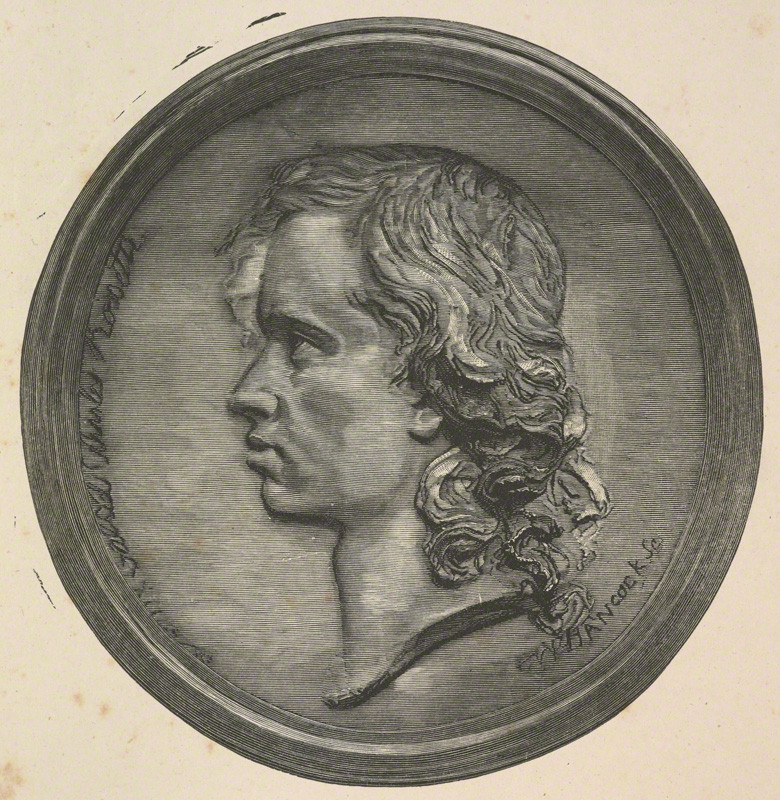
NPG P1273(56); Dante Gabriel Rossetti by Paul Jonnard, after  John HancockSculptor John Hancock’s 1846 plaster medallion is the earliest known likeness of Rossetti in adulthood. This is the young, dreamy Gabriel Hunt and Stephens remembered shirking classes at the Royal Academy: 18, girlish and moody, with unbrushed ‘elf locks’, and an insouciant air masking rickety self-confidence. Always surrounded by what Hunt called his ‘following of clamorous students’, the adolescent Gabriel wore his poverty with bravado: if you took exception to his unfashionable, mud-spattered clothes, well, you obviously didn’t have a poet’s soul.
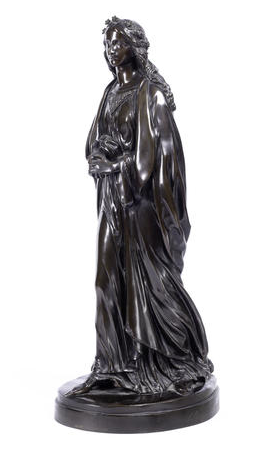
John Hancock (not to be confused with the American periwig enthusiast) is one of those fleeting blips on the radar of PRB history. From the glimpses we get of Hancock, it seems he was one of the many little fishes swept up by Gabriel’s net of enthusiasm. (Everyone was a stunning painter! Even if he’d never touched a brush.) Hancock’s young cousin Tom was certainly bewitched by this long-haired teenager bursting with admiration for Shelley and Keats. “How much I owe to listening to his talk at a very impressionable age,” he later wrote.

Like everyone else Gabriel was fond of, Hancock received a ribbing in verse. Here he is, getting on everyone’s nerves at a PRB gathering:

Dante's Beatrice

Dante’s Beatrice by John Hancock

The hop-shop is shut up: the night doth wear.
Here, early, Collinson this evening fell
“Into the gulfs of sleep”; and Deverell
Has turned upon the pivot of his chair
The whole of this night long; and Hancock there
Has laboured to repeat, in accents screechy,
“Guardami ben, ben son, ben son Beatrice”;
And Bernhard Smith still beamed, serene and square.
By eight, the coffee was all drunk. At nine
We gave the cat some milk. Our talk did shelve,
Ere ten, to gasps and stupor. Helpless grief
Made, towards eleven, my inmost spirit pine,
Knowing North’s hour. And Hancock, hard on twelve,
Showed an engraving of his bas-relief.

(Rhyming ‘screechy’ with ‘Bay-ah-tree-chi’ – amazing. Almost as good as ‘wombat’ with ‘flings a bomb at’.)

But not everyone took to Hancock. Gabriel’s brother William described him as ‘an ungainly little man, wizened, with a long thin nose and squeaky voice’. Such venom was possibly because he failed to produce promised funding and content for The Germ. It certainly wasn’t the last time William took the hump with someone who encroached upon his and Gabriel’s twin-like bond – see Lizzie Siddal, Fanny Cornforth etc – but, tantalisingly, we don’t have details.

Unlike the majority of the PRB circle, Hancock had steady financial backing from his family and experienced early success, exhibiting successfully in London and Paris and gaining widespread praise for his lovely plaster statue of Dante’s Beatrice. But something, somewhere, went wrong.

Hancock died of gastric irritation and exhaustion just after Christmas 1869, aged only 41, with just £20 to his name (very roughly, £1400 of today’s money). In his obituary, The Athenaeum lamented: ‘the anticipated progress of the sculptor was somewhat suddenly stayed and not renewed’. We do know that Hancock asked to use the PRB initials, but, for unknown reasons, was never permitted to do so. William alluded to ‘unfortunate circumstances into which it is not my affair to enter’ (but apparently enough of his affair to draw everyone’s attention to in print).

What happened to Hancock between the lovely plaster medallion of the teenage Gabriel and his early death? I’d love to know.

Contraindications – now on Kindle

Contraindications

I’m pleased to say that my chapbook of six poems, Contraindications, is now available for Amazon Kindle. It will still be available here as a PDF, so readers have a choice of formats to suit their devices, and the option to print. We will also be publishing on other platforms, like Kobo, shortly.

Thanks go to Gabriel May for the hours he spent grappling with code, formatting and converting the files by hand. It was a laborious process; one I couldn’t have managed without his patience and technical expertise. If you need your own ebook converted, Gabriel is considering offering his services to more writers – so get in touch.

The Wombat is a Joy, a Triumph, a Delight, a Madness!

Wombat Friday

Wombie the World-Travelling Wombat looks nervous in the face of so much arsenic and adultery.

I emerge from a week of sinus infection horror raring to plough through the pile of books I’ve accrued and to – finally! – take part in #WombatFriday with the rest of the Victorianists on Twitter.

If you’re unaware of the long and illustrious saga of the noble marsupial in art history, pick up a copy of Rossetti’s Wombat: Pre-Raphaelites and Australian Animals in Victorian London and enjoy the account of Rossetti’s wombat, Top, plodding up to Ruskin (in mid-flow on the subject of communal artistic living as a means of saving humanity) to snuggle between his coat and waistcoat. Ruskin, being British and not the host, carried on “wring[ing] his hand and soul” as though nothing was happening.

When I am queen, I will burn down the castle.

They say that one passion leads to another. Long before I discovered Dante Gabriel Rossetti, I lived in Gormenghast.

Gormenghast

Between school bullies, kidney infections, and the oncoming Iraq war (which, I’d somehow convinced myself, was my fault), the year 2000 was a dismal time to be fourteen. But when the BBC released a four-part adaptation of Gormenghast in time for the Millennium, something shifted. From my hospital bed, I imagined the mauve peaks and crumbling spires of the castle on the horizon. I stopped doing my homework. Mervyn Peake’s Machiavellian fantasy was a safe place to escape to.

I never grew out of it. At my first University graduation, seeing the professors traipsing down the aisles in their gowns and mortar boards, I whispered excitedly to the boy next to me: “This is just like Gormenghast!” He had no idea what I was on about.

Years pass. We grow up, our tastes evolve. I fell out with high fantasy, fell into the nineteenth century. But, over a decade after my first encounter with Gormenghast,  thumbing through my paperback trilogy, something sounded familiar…

Fuchsia-and Steerpike

“A girl of about fifteen with long, rather wild black hair. She was gauche in movement and, in a sense, ugly of face, but with how small a twist might she not suddenly have become beautiful. Her sullen mouth was full and rich – her eyes smouldered. A yellow scarf hung loosely around her neck. Her shapeless dress was a flaming red. For all the straightness of her back she walked with a slouch.”

Oh, hello, Jane Morris.

Jane Morris

For a fourteen-year-old reader, Lady Fuchsia Groan is an easy character to relate and aspire to. Living in isolation where ‘the halls, towers, the rooms of Gormenghast were of another planet’, her response to most things is to run away to her dark attic of storybooks and paintings. She is a petulant child playing Ophelia and Juliet, dying to fall headlong into a world of chivalric romance and adventure.

Fuchsia – in Peake’s own illustrations and his text – has unmistakable similarities to Rossetti’s Jane. Like La Pia, Fuchsia glowers with the lethargic energy of someone who wants to be somewhere else but isn’t sure where. Her unkempt hair and pronounced features give her the ‘unpretty’ Pre-Raphaelite beauty the Victorians were so bothered by. Jane was considered unfortunately unattractive by many. Fuchsia, too.

lapiafuchsiared

There are Pre-Raphaelite echoes in every corner of Gormenghast. Maybe it’s the meeting of the Gothic and the Chivalric, the tragic and the absurd, or Peake’s own network of literary sources including Lewis Carol and The Brothers Grimm. Peake’s childhood in China and later studies at the Royal Academy gave his work a sense of ancientness and the exotic that reminds me of Holman Hunt’s picking and choosing of historical and cultural details. You can see it in The Hall of The Bright Carvings and the almost Tibetan descriptions of the endless corridors and slanting roofs of the castle.

mervynpeakeuptree

Mervyn, acting casual

As a war artist in the 1940s, Peake saw terrible scenes of human cruelty in the rubble of the bombsites and the concentration camps. Perhaps it was only natural to head for the dusty safety of the past.

The BBC adaptation – which I realise is not to every Peake-purist’s taste – is funhouse mirror Pre-Raphaelitism. Nature is vast and unfathomable. Steerpike wheedles his way into Fuchsia’s favour by claiming to be “like the knights of old, your ladyship” only to find he can’t possibly live up to Fuchsia’s fantasies. In John Constable’s later stage show, Fuchsia is even given red hair. (Actual audience comment: “This is horrible. They said it was fantasy. It’s nothing like Harry Potter at all.”)

Fuchsia and Jane

The BBC costumes are luxuriant. Fuchsia starts off as a teenager in a loose red velvet dress embroidered with stars. As she gets older and sadder, her outfits become heavier, more stiffly structured, until she is dragged down into the foaming floodwaters like Ophelia, leaving flowers in her wake.


The costume department referred to some of the same sources the Pre-Raphaelites did – Velázquez and Botticelli – resulting in voluminous layers of fabric and detail (even hazelnuts as buttons!) like a mad dressing-up session in a museum vault. Actress Neve McIntosh would gain two inches in height after taking off Fuchsia’s weighty gowns. Rossetti, with his reams of fabric cluttering up the house, would have loved it.

Lady Gertrude Groan
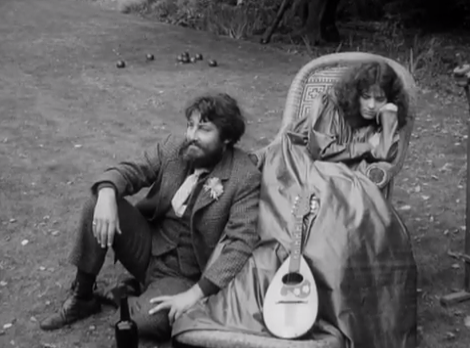
Excuse the poor quality photograph, but wouldn’t Rossetti have made a great job of this still from the film as a painting? Minus the prosthetic chin.

I wonder if I would have reacted so strongly to the Pre-Raphaelites had I not experienced Gormenghast so young. One good thing leads on to another. What’s next?


Buy The Gormenghast Trilogythe BBC miniseries on DVD, or the fantastic soundtrack by Sir John Tavener who, coincidentally, has Marfans.