The V&A have done it again.
‘David Bowie is’ was always going to be an immense undertaking, being a study of the evolution of earnest Davie Jones of The Society For The Prevention of Cruelty To Long Haired Men into…whatever this is…
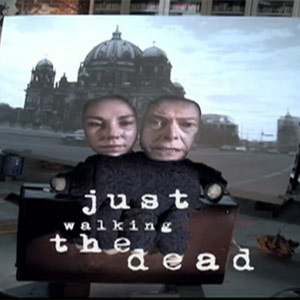
But they pull it off. Beautifully.
Bowie has always been like a distantly freakish but much-loved uncle to me. I first got into his music by raiding other people’s parents’ record collections in the ’90s, and although I didn’t understand most of it, it stuck with me and shaped my tastes. I can’t claim to know much about him – I just enjoy the spectacle.
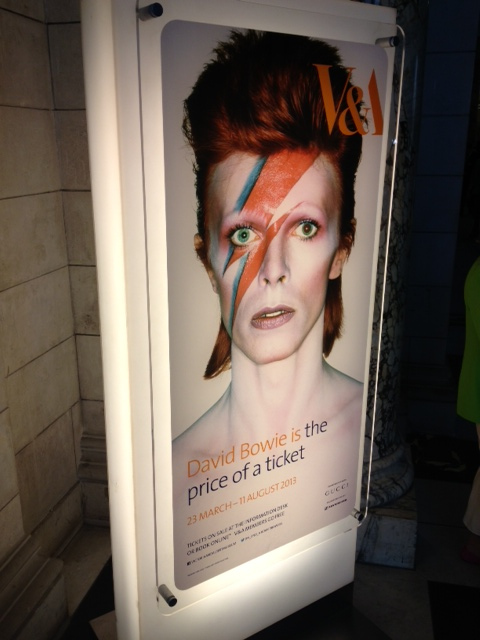 And spectacle is what the V&A provides, introducing you to the sensibly-suited Bromley boy who “just wanted to be known” all the way through to a cavern of screens displaying a gigantic gyrating Bowie flanked by mannequins displaying a career’s worth of costumes. The effect is like entering the temple of a strange, glamorous god, compounded by signs reading “David Bowie is watching you”. (We liked the less-worrying Warholian “David Bowie is thirsty – head to the cafe for orange juice or coffee!”) Would museum-goers accept such a gargantuan display from anyone else?
Laid out like the relics of saints, it’s thrilling to get within arm’s length of the tiny-waisted suits of The Thin White Duke and the dusty Regency pirate chic of Screaming Lord Byron. This collection of characters, each with a unique wardrobe, sound, and method of movement gives the impression of all the Bowies being present at once – a cast of personas that make you wonder who and where the actual David is. Or if he exists at all.
David Bowie Is Leaving Clues Everywhere
It was interesting to see evidence of Bowie’s consciousness that no art is fixed to its author’s intentions. Once it’s out there, it becomes a link in a chain of reactions, visualised in ‘The Periodic Table of Bowie’ by Paul Robertson at the exhibition’s end, filing high-profile fans like Morrissey under “fly my pretties fly”.
We get tantalising scraps of Bowie’s multimedia consumption, of bits and pieces ransacked from culture modern and antique. He remarks he may well have ended up as a novelist, and you see the mingling of the musical/literary/cinematic in the storyboarding for Hunger City with its echoes of A Clockwork Orange and Todd Browning’s Freaks. The wordplay in Future Legend is decidedly Mervyn Peake:
Of course, my favourite was always going to be the frock-shot on The Man Who Sold The World. “Funnily enough, and you’ll never believe me, it was a parody of Gabriel Rossetti. Slightly askew, obviously.” Dinah Roe has written about the amusing homage here.

Highlights
I usually hate tinny museum headphones, but the sound here was high-quality with a clever ‘spotlighting’ system sensing where you were standing. You could stand three feet away from someone having a totally different experience.
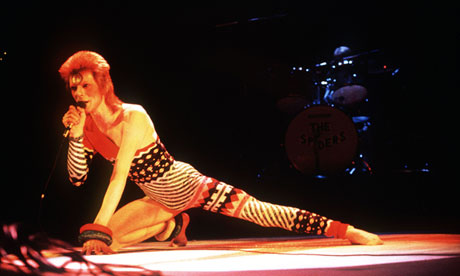 This knitted catsuit was apparently available in pattern form for early fans to copy. Sadly no photos of valiant DIY efforts.
Small children leaping about, playing air guitar – the chain reaction at work.
The Goblin King’s crystal alongside a handwritten letter from Jim Henson telling Bowie how perfect he’d be for the role.
GO.
The exhibition continues until August 11th 2013. All online tickets are currently sold out, but if you turn up the the V&A’s main desk when they open at 10am, you’re likely to get a ticket for later in the day.
 . She calls Reed ‘solid but smouldering’.


 I know what you’re thinking. Where’s the fire escape?
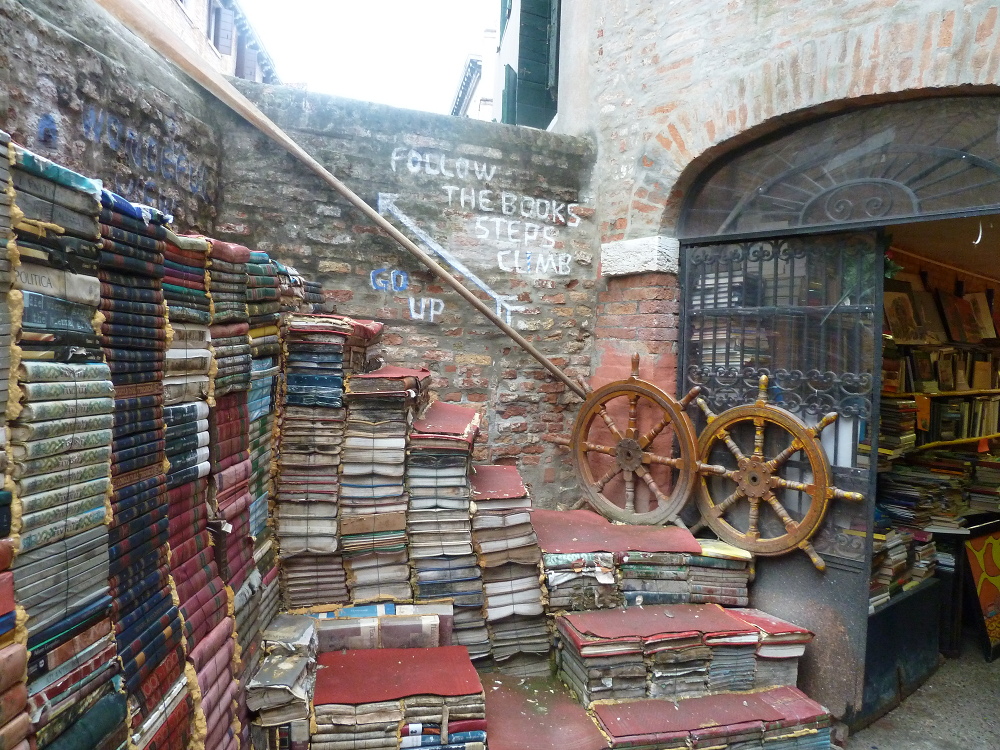 Nailed it.
 When the news filtered through to the mainstream press, I’d been reading about the Australian artist Vali Myers. Vali, with her trademark raccoon eyes, red haystack of hair, and tattooed moustache, is such an exciting figure, not only for her outlandish paintings and appearance, but because her chosen adornments were so intrinsic to her sense of self:
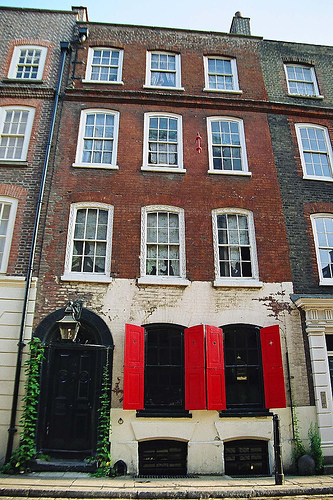 The first rule of Dennis Severs’ house is that you do not talk in Dennis Severs’ house.
 and rang the bell on number 18, the door immediately opened to reveal a composed gentleman in warm winter clothes.

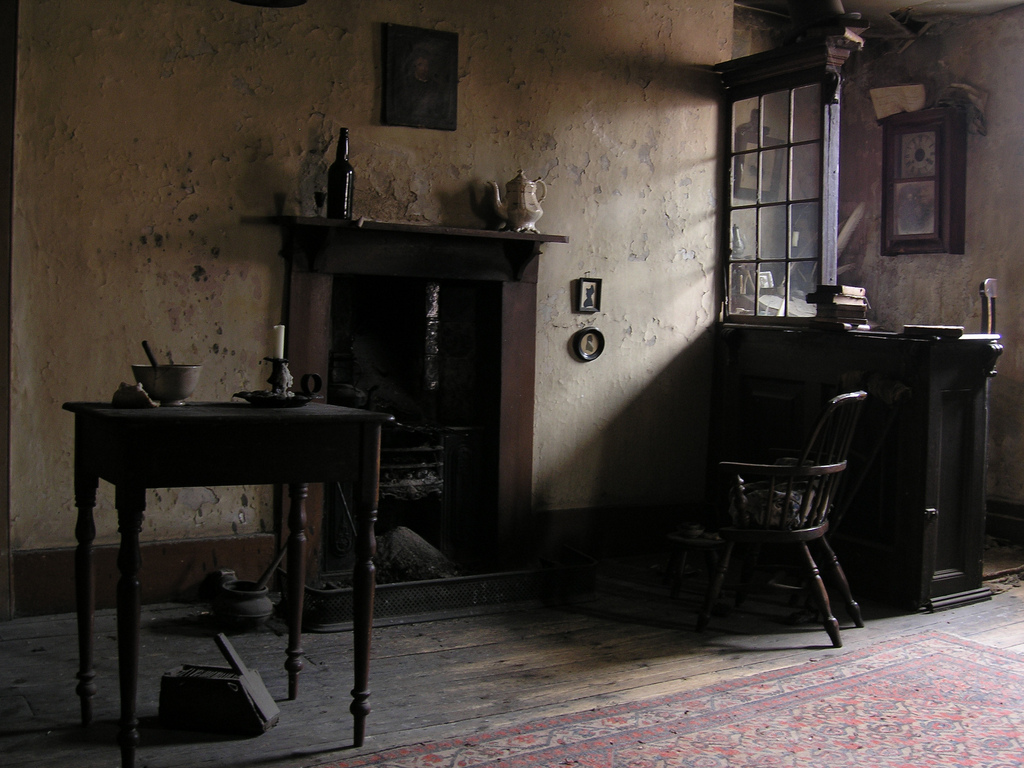 “You must forgive the shallow who must chatter,” says another note. We have the Internet, 24 hour news, the telephone with the police on the end waiting for our call. The Severs house recreates the cut-offedness we’ve learned to forget. If you love history, you spend eons inside books offering first person accounts of a moment 100 years old or more, but when you enter the closed atmosphere of 18 Folgate Street, with its strange sounds, strong smells, and unreliable light, you at once feel vulnerable.
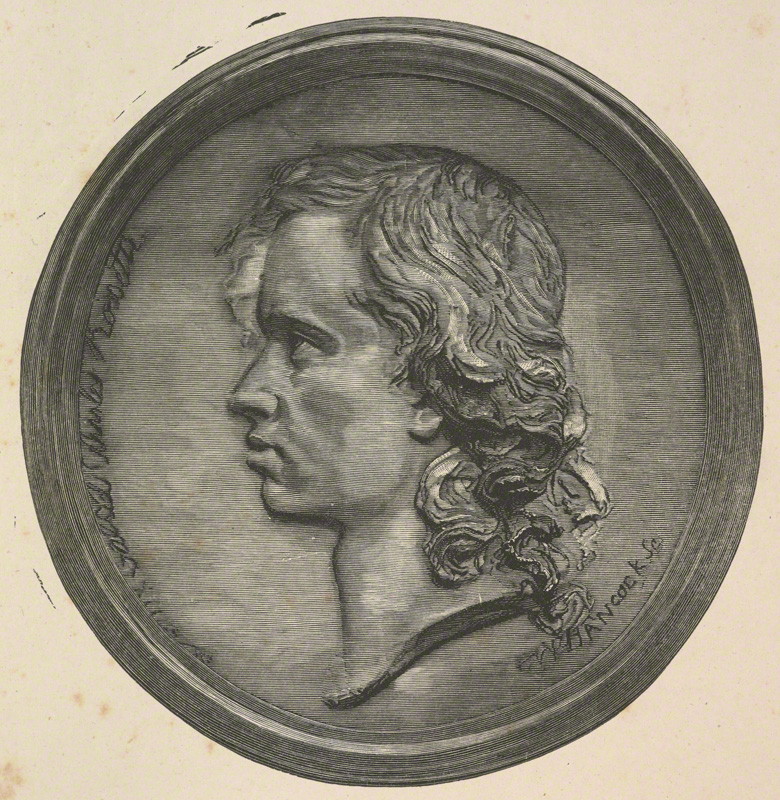 Sculptor John Hancock’s 1846 plaster medallion is the earliest known likeness of Rossetti in adulthood. This is the young, dreamy Gabriel Hunt and Stephens remembered shirking classes at the Royal Academy: 18, girlish and moody, with unbrushed ‘elf locks’, and an insouciant air masking rickety self-confidence. Always surrounded by what Hunt called his ‘following of clamorous students’, the adolescent Gabriel wore his poverty with bravado: if you took exception to his unfashionable, mud-spattered clothes, well, you obviously didn’t have a poet’s soul.